Trane Buying Guide for Glendale Homes
Last updated 2026-06-13. Cost ranges are typical 2026 SoCal figures; confirm with a local quote.
Short version: Glendale Trane HVAC helps you pick a Trane across Glendale, CA (ZIP 91201-91208), so call (213) 772-2088 or book online for a Manual-J fit assessment. Match the tier to the house: single-stage XR for simple flatland loads, two-stage XL for steadier comfort, and variable-speed XV18 or XV20i for large, heat-trapping foothill homes.
The essentials
- Trane tiers: XR single-stage, XL two-stage, XV18 and XV20i variable-speed.
- XV20i reaches up to about 20.5 SEER2 with a Climatuff variable-speed compressor.
- Signature parts: Climatuff compressor, all-aluminum Spine Fin coil.
- Communicating XV systems need an XL824/XL850 ComfortLink II thermostat.
- Central AC replacement $5,000-$12,000; heat pump $6,000-$16,000 (2026 SoCal).
- A correct Manual J size outweighs the tier choice; oversizing is the expensive mistake.
- Mild Zone 9 winters make heat pumps a strong option here.
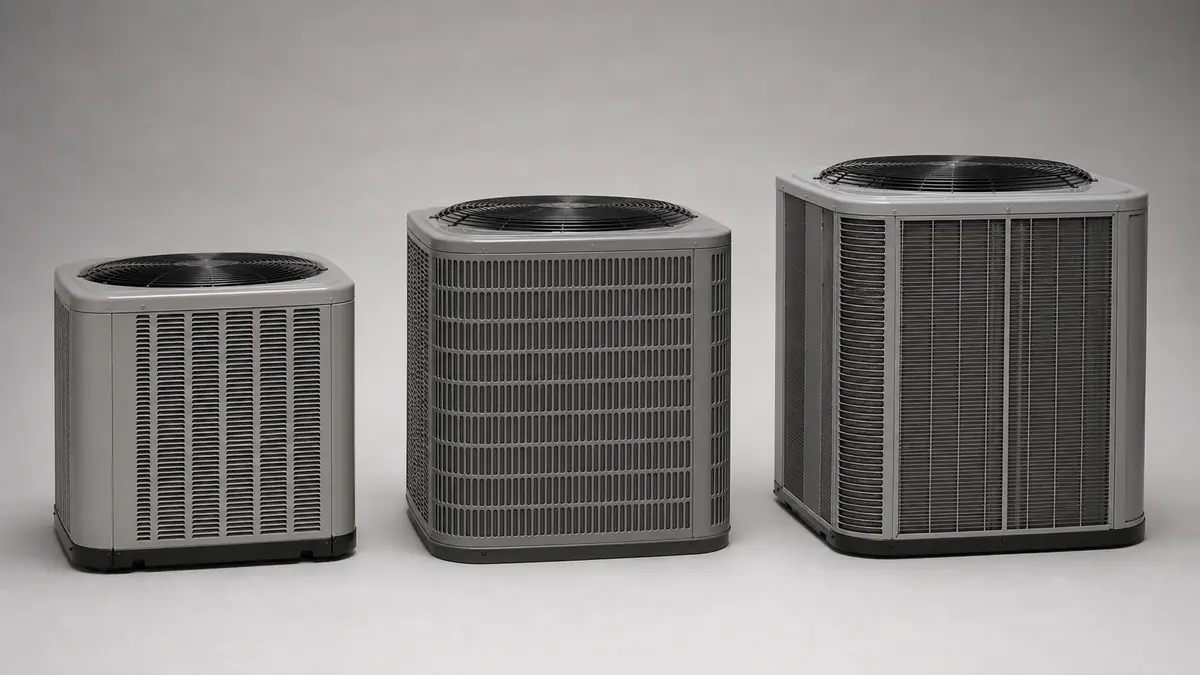
How is Trane's lineup organized?
Trane's residential air conditioners and heat pumps stack into tiers by how the compressor runs. The XR series is single-stage - the compressor is fully on or fully off - and it is the durable, affordable value tier, models XR13 through XR17. The XL series is two-stage, running a lower stage most of the time and a high stage on the hottest days, which is quieter and steadier. At the top, the XV18 and XV20i are variable-speed: a Climatuff variable-speed compressor modulates across a wide range, paired with the all-aluminum Spine Fin coil and a ComfortLink II XL824 or XL850 communicating thermostat. The XV20i reaches up to roughly 20.5 SEER2. Every tier shares Trane's two signature parts, so the difference you are buying is staging, efficiency, and comfort smoothness - not durability.
| Tier | Staging | Best fit in Glendale | Typical installed |
|---|---|---|---|
| XR (XR13-XR17) | Single-stage | Flatland homes, simple load | $5,000 - $8,500 |
| XL (two-stage) | Two-stage | Mid-size, comfort upgrade | $7,000 - $10,500 |
| XV18 | Variable-speed | Larger or sun-exposed homes | $9,000 - $12,000 |
| XV20i | Variable-speed | Foothill / large multi-zone | $10,000 - $14,000 |
AC or heat pump for a Glendale home?
This is the bigger fork than the tier. A heat pump is mechanically an air conditioner that also runs in reverse to heat, and Glendale's mild Climate Zone 9 winters play to it - a standard Trane 4TWV heat pump heats easily here and serves as your air conditioner through the long cooling season, doing both jobs from one outdoor unit. If your gas furnace is near the end of its life, it genuinely pays to price a heat pump conversion against replacing the furnace and keeping a separate AC. California's code is tilting toward heat pumps, and utility electrification rebates can offset some cost - but note that the federal 25C credit was repealed on December 31, 2025, with no credit for 2026 installs, so leave it out of your budget. If the furnace is still sound, a straight AC replacement is the simpler path. Our heat pump page and gas furnace page compare the two.
Why does sizing matter more than tier?
The priciest buying error is the wrong size, and oversizing is rampant in older Glendale homes where the replacement gets matched to the outgoing unit's tonnage instead of the actual load. An oversized system cools in short bursts, never settles into efficient operation, leaves humidity unmanaged, and wears out its compressor and capacitor early. To fit the equipment to the house, we run a Manual J load calculation - square footage, insulation, window area and orientation, and air infiltration. In a tight 1920s bungalow the right answer is frequently a smaller, better-matched XR, not the oversized XV implied by the old box. Sized correctly, an honest mid-tier unit outperforms an oversized premium one.
Will my ducts let the new system perform?
A high-SEER2 system only delivers its rating if the ducts can move the air. Many Glendale flatland homes in Adams Hill and Rossmoyne have undersized returns and leaky retrofitted ductwork that strangle a modern coil - put a 20-SEER2 condenser on bad ducts and you paid for efficiency you will never see. Before recommending a tier, we measure static pressure and duct leakage. If the ducts need sealing or resizing, that work often returns more comfort and savings than jumping a tier on the condenser. Our high energy bills page explains how duct losses show up on the meter.
What about the line set, pad, and electrical?
The condenser is only part of the buy. When refrigerant changes - and the industry is moving from R-410A toward lower-GWP refrigerants on newer equipment - a swap can mean replacing or flushing the line set rather than reusing old tubing, which adds cost but protects the new compressor. In hillside Glendale homes, the condenser pad and disconnect often sit in a tight side yard, so plan the set location and a code-compliant electrical disconnect into the quote. A variable-speed XV20i also draws on a clean, stable circuit; on older 1920s panels we sometimes find the electrical service needs attention before a premium system performs reliably. None of this is exotic, but it belongs in the price you compare, not as a surprise on install day.
When is it repair, and when is it replace?
When the system is limping, run the math before you spend. Two rules of thumb decide it. First: replace once a repair would top roughly half the price of a new system and the unit is past 10 to 12 years. Second, the age-times-repair-cost test - multiply the unit's age in years by the repair quote, and if the result clears about $5,000, lean toward replacement. A $300 capacitor on a sound 14-year-old XR is an easy fix. A $2,800 compressor on a 19-year-old unit fails both tests and argues for replacement. We give you both numbers straight rather than steer you toward the bigger sale.
| Unit age | Repair cost | Lean toward |
|---|---|---|
| Under 10 yrs | Any single repair | Repair |
| 10-12 yrs | Under ~50% of new | Repair |
| 12+ yrs | Major part (compressor) | Replace |
| Any age | Age x repair > ~$5,000 | Replace |
A worked example: a 1,500 sq ft Adams Hill bungalow
Numbers make the tradeoffs concrete. Take a 1,500-square-foot 1925 Spanish revival in Adams Hill with decent attic insulation, moderate west-facing glass, and the original ducts. The old equipment was a 4-ton single-stage unit - badly oversized, which is why it short-cycled and left the back bedrooms muggy. A Manual J on the actual envelope returns a cooling load closer to 2.5 tons. The honest recommendation here is a 3-ton Trane XR16 or a two-stage XL, not a 4-ton XV20i. Going variable-speed on this house would cost roughly $4,000 more and short-cycle anyway, because the load is too small to use the modulation. Right-sizing down to 3 tons also lets the existing returns breathe. Installed, that XR16 lands around $6,500-$8,000; the two-stage XL adds about $1,500-$2,500 for quieter, steadier operation that a sun-swung floor plan actually benefits from. The premium XV20i is the wrong buy on this specific house - a clean illustration that tier should follow load.
A worked example: a 3,200 sq ft Rossmoyne revival
Now flip the scenario. A 3,200-square-foot 1929 period-revival in Rossmoyne, two stories, high ceilings, large window area, and a floor plan that wants different temperatures upstairs and down. Here the Manual J lands near 5 tons, and the comfort complaint is uneven temperatures, not just cost. This is exactly the house where a variable-speed Trane XV18 or XV20i earns its premium: the Climatuff variable-speed compressor modulates down to hold a steady temperature across a big footprint, and paired with an XL850 ComfortLink II control it can run a zoned setup that conditions upstairs and down independently. Installed, that variable-speed system with zoning runs roughly $12,000-$16,000, more if ductwork is reworked. On this home the XR would cycle hard and never even out the floors, so the value math points the opposite direction from the bungalow. Same brand, same city, opposite answer - because the load and the comfort problem are different.
What should I confirm before signing?
Ask for the Manual J load number, the matched indoor coil or air handler model (a mismatched pair underperforms), the permit and HERS plan, and a clear scope on ductwork. Treat rebates as a bonus you verify in writing from the program, never a promise. And make sure whoever installs it is going to verify charge and airflow at startup - a perfectly chosen Trane installed sloppily is no better than the wrong unit. Our AC installation page details the install and verification process we follow across Glendale.
The bottom line for a Glendale buyer
Decide in this order, and the brochure stops mattering. First, get a Manual J load number for your actual house - it caps how big the equipment should be and is the single most expensive thing to get wrong. Second, choose AC versus heat pump on the fuel and the furnace's remaining life, remembering the federal 25C credit is gone for 2026. Third, fix the ducts and charge so whatever you buy can reach its rating. Only then pick the tier: XR for a simple flatland load, XL for a comfort upgrade, XV18 or XV20i for a large or heat-trapping foothill home. A correctly sized XR on tight ducts beats an oversized XV20i on leaky ones every time, and it costs thousands less. Our SEER2 and rebates guide covers the code floors and incentive caveats, and the high energy bills page shows how a wrong choice shows up on the meter.
Common questions
Which Trane tier is right for my Glendale home?
Match the tier to the load and exposure. A flatland home near Downtown Glendale with a simple load is well served by a single-stage XR. A mid-size home wanting quieter, steadier comfort fits a two-stage XL. A large Rossmoyne revival home or a heat-trapping foothill house in El Miradero gets the most from a variable-speed XV18 or XV20i.
Should I buy an air conditioner or a heat pump?
Glendale's mild Climate Zone 9 earns a heat pump a serious look. It cools like an AC and heats fine through our soft winters, handling both jobs off one outdoor unit. If your gas furnace is winding down, price a Trane 4TWV heat pump against a furnace-plus-AC pairing. Electrification rebates can narrow the gap, though the federal 25C credit ended on December 31, 2025, and pays nothing on a 2026 install.
Is the most expensive Trane always the best choice?
No. Over-buying capacity is a common, costly mistake. Put a variable-speed XV20i in a small, simple home and it short-cycles and never recovers its premium. The right unit is the one a Manual J load calculation sizes to your actual load, on ducts that can carry its rated efficiency. Sometimes that answer is an XR, not an XV.
How long should a new Trane last in Glendale?
With twice-a-year maintenance, a well-installed Trane commonly runs 15 to 20 years here. The capacitor is the part most likely to need replacing along the way - routine and inexpensive. The compressor and coil are the expensive parts, which is why correct sizing and charge at install matter so much to longevity in our heat.